
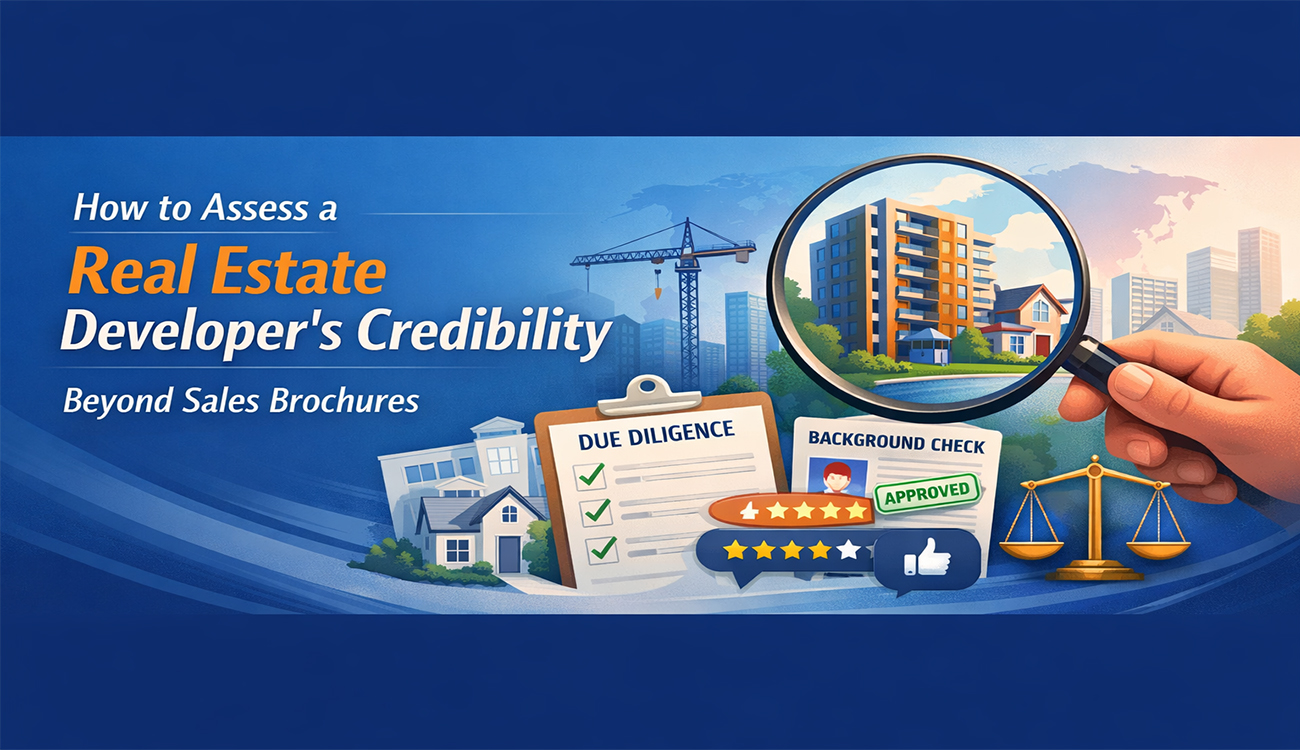
Buying a home or investing in real estate is often the biggest financial decision of one’s life. While glossy brochures, celebrity endorsements, sample flats, and attractive offers can be persuasive, they rarely tell the full story about a real estate developer. In fact, many buyers realize too late that strong marketing does not always translate into timely delivery, construction quality, or long-term value.
To make a truly informed decision, it is essential to judge a developer beyond marketing materials. This detailed guide explains how homebuyers and investors in India can evaluate a developer’s credibility, track record, financial strength, and execution capability—well before signing the agreement.
Why Marketing Brochures Can Be Misleading
Marketing brochures are designed to sell aspiration. They highlight best-case scenarios, artistic impressions, lifestyle visuals, and future promises. However, brochures are not legal documents. Amenities may change, timelines may shift, and specifications can be altered within the fine print of the agreement.
Many delayed or stalled projects in India were once backed by impressive branding. Therefore, relying solely on marketing content exposes buyers to risk. The real strength of a developer lies in execution, transparency, and consistency—factors that brochures rarely showcase honestly.
Start With the Developer’s Track Record
The first and most reliable indicator of a developer’s credibility is their past performance. A developer who has consistently delivered projects on time is far more dependable than one who is launching its first large-scale project.
Research how many projects the developer has completed, not just launched. Look closely at delivery timelines—were projects handed over as promised, or were there repeated delays? A delay of a few months may be understandable, but delays extending to years indicate deeper issues related to planning, finance, or management.
Also evaluate whether completed projects have received Occupancy Certificates (OC) and Completion Certificates (CC). These approvals confirm that the project complies with statutory norms and is legally fit for occupation.
Visit Completed Projects, Not Just Sample Flats
Sample flats are carefully curated spaces designed to impress. Instead, visiting completed projects gives you a realistic view of construction quality, finishing standards, and maintenance.
Pay attention to common areas such as lobbies, lifts, staircases, parking areas, and external facades. Poor maintenance, water seepage, cracked walls, or malfunctioning elevators often indicate compromises in construction quality.
If possible, interact with existing residents. Their feedback on post-possession service, defect liability handling, and maintenance costs provides invaluable insights that no brochure will ever reveal.
Check RERA Compliance and Transparency
In India, the Real Estate (Regulation and Development) Act (RERA) is one of the strongest tools for buyers. A credible developer will always have projects registered under the respective state RERA authority.
Visit the RERA portal and verify:
- Project registration number
- Approved layout plans
- Declared possession date
- Number of units sold
- Past litigation or complaints
RERA filings reveal whether the developer is realistic about timelines and whether they update progress regularly. A history of RERA penalties, frequent extensions, or unresolved buyer complaints should raise red flags.
Evaluate Financial Strength and Funding Structure
A developer’s financial health plays a crucial role in timely project completion. Projects that rely heavily on customer advances or short-term borrowing are more vulnerable to delays, especially during market slowdowns.
Well-capitalized developers typically have:
- Strong equity backing
- Institutional funding from banks or private equity firms
- Lower dependence on pre-sales for construction
While financial details may not always be public, clues can be found through news articles, credit ratings, joint ventures, or partnerships with reputed financial institutions.
A developer with sound financial discipline is less likely to divert funds or stall construction due to cash flow issues.
Understand Land Ownership and Title Clarity
One of the most overlooked aspects by buyers is land ownership. Before investing, it is critical to understand whether the developer owns the land outright, has development rights, or is operating under a joint development agreement (JDA).
Title clarity directly impacts project risk. Any dispute related to land ownership can stall construction indefinitely. Buyers should ensure that:
- Land title is clear and marketable
- All past encumbrances are resolved
- Necessary approvals are in place
Reputed developers usually provide full transparency on land status and willingly share legal documentation upon request.
Analyze Construction Quality and Materials Used
Beyond aesthetics, the structural quality of a building determines its durability and long-term maintenance cost. Evaluate whether the developer uses branded construction materials, reputed contractors, and modern construction technology.
Ask specific questions about:
- Structural design consultants
- Earthquake resistance standards
- Waterproofing systems
- Electrical and plumbing brands
Developers confident about quality will provide detailed specifications rather than vague descriptions. Over time, superior construction quality translates into better resale value and lower repair expenses.
Assess Project Execution and Site Progress
Regular site visits offer clear insight into how efficiently a developer executes projects. Compare the promised construction timeline with actual on-site progress.
Well-managed projects show systematic construction, proper safety measures, and adequate workforce. Erratic progress, frequent stoppages, or long periods of inactivity are warning signs.
Also observe whether multiple projects by the same developer are progressing simultaneously. Overextension across too many launches can dilute focus and strain resources.
Study Customer Communication and Transparency
A trustworthy developer maintains open and proactive communication with buyers. Regular updates, progress photographs, milestone announcements, and prompt responses reflect professionalism.
Poor communication, vague answers, or reluctance to share information often signal deeper organizational issues. Transparency during construction usually correlates with accountability after possession.
Buyers should also review the Agreement for Sale carefully. Fair agreements clearly mention possession timelines, penalty clauses for delays, specifications, and exit options. One-sided clauses heavily favoring the developer should be approached with caution.
Look Beyond Price and Offers
Aggressive pricing, discounts, or limited-period offers can be tempting, but they should never override due diligence. In many cases, unusually low prices compensate for location disadvantages, delayed approvals, or execution risks.
A credible developer focuses on value rather than short-term discounts. Properties by reputed developers may appear slightly more expensive initially but often deliver superior appreciation, rental demand, and peace of mind over the long term.
Check Reputation in the Market and Media
Reputation is built over years and cannot be fabricated overnight. Search for independent media coverage, not sponsored content. Reports on delays, litigation, or regulatory action provide important context.
Online forums, buyer groups, and review platforms can also offer insights, though feedback should be evaluated objectively. Consistent negative feedback across multiple sources is rarely coincidental.
Importance of Developer Ethics and Corporate Governance
Ethical business practices matter, especially in real estate where transactions involve long timelines and large sums. Developers with strong governance frameworks, professional management teams, and compliance-oriented cultures are more reliable partners.
Signs of ethical practices include:
- Honoring commitments even during market downturns
- Fair resolution of buyer grievances
- Willingness to compensate for delays as per agreement
Such developers prioritize long-term brand value over short-term profits.
Why Judging the Developer Matters More Than the Project
A project can be redesigned, amenities can be added, and locations can improve over time. However, a developer’s mindset and execution capability remain constant.
Choosing the right developer significantly reduces risks related to delays, quality compromises, and legal complications. It also ensures smoother possession, better resale prospects, and higher long-term satisfaction.
Final Thoughts: Make the Developer the First Filter
In today’s real estate market, informed buyers look beyond marketing gloss. They evaluate developers based on delivery history, financial discipline, transparency, and ethics.
Before committing your hard-earned money, invest time in researching the developer as thoroughly as the property itself. This approach transforms real estate buying from a speculative gamble into a strategic, confident decision.
Looking for Verified Projects by Trusted Developers?
At Horizon, we help homebuyers and investors identify projects by credible, RERA-compliant developers with proven delivery records. From background checks to site visits and legal clarity, our experts ensure you invest with confidence—not just persuasion.
Connect with Horizon today to explore homes built by developers you can truly trust.