






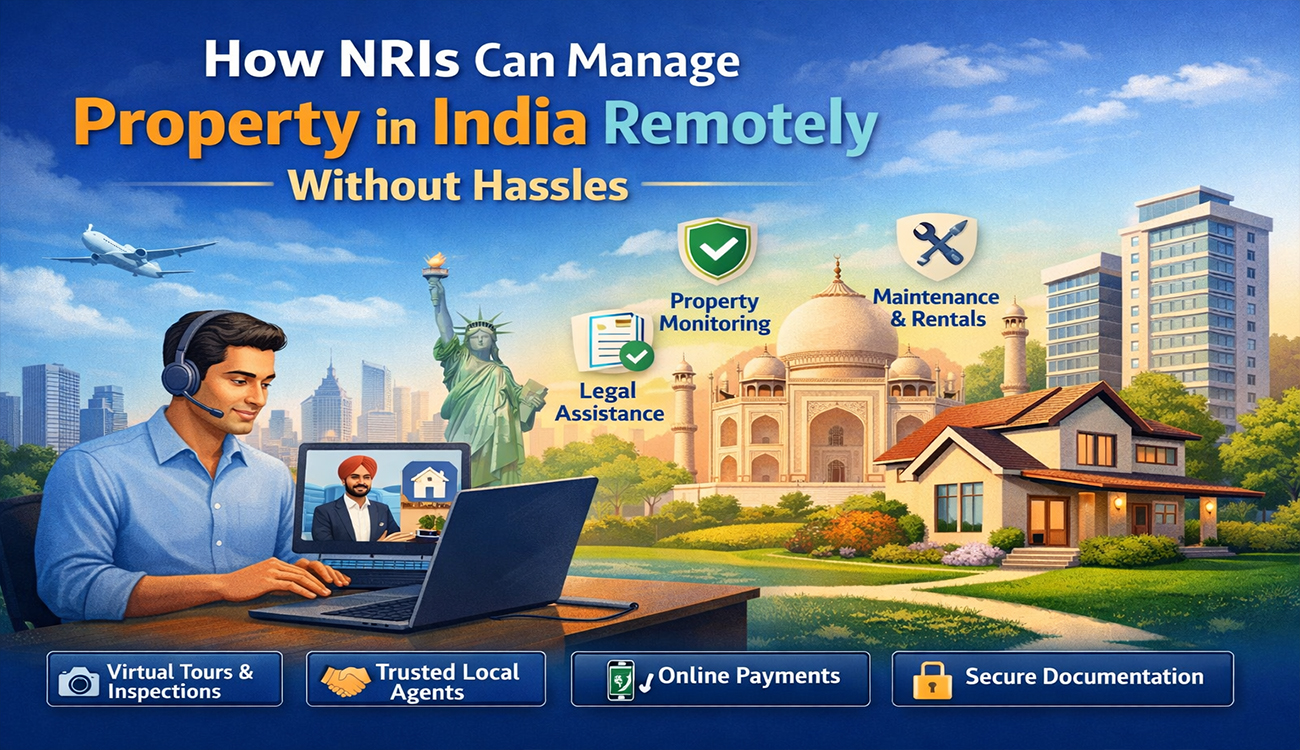
The Reality of Managing Property from Abroad
For Non-Resident Indians (NRIs), owning property in India is both an emotional and financial decision. It may represent roots, long-term investment, retirement planning, or rental income. However, managing property while living thousands of miles away comes with unique challenges—tenant coordination, rent collection, legal compliance, maintenance issues, and evolving regulatory requirements.
In 2025–26, remote property management has become easier than ever—provided NRIs understand the right systems, legal structures, and professional support available. Digital governance, RERA compliance, online banking, and specialized property management services have transformed the way NRIs can control their Indian real estate assets without frequent travel.
This comprehensive guide explains how NRIs can manage property remotely in India, covering legal authority, taxation, rental management, documentation, maintenance, compliance, and risk mitigation—step by step.
1. Common Challenges NRIs Face While Managing Property Remotely
Before exploring solutions, it is important to understand the real issues NRIs face.
Key Pain Points
- Difficulty coordinating with tenants
- Delayed or missed rent payments
- Property misuse or illegal subletting
- Maintenance negligence
- Legal disputes and encroachment risks
- Lack of reliable local contacts
- Tax compliance confusion
- Power of Attorney misuse fears
These challenges are real—but they are manageable with proper planning.
2. Legal Foundation: Power of Attorney (PoA) for NRIs
The cornerstone of remote property management is a properly executed Power of Attorney (PoA).
What Is a Power of Attorney?
A PoA authorizes a trusted individual in India to act on behalf of the NRI owner for specific property-related activities.
Types of PoA
- General PoA: Broad authority (not recommended unless absolutely necessary)
- Special PoA: Limited authority for defined purposes (highly recommended)
Activities Allowed Under PoA
- Signing lease agreements
- Collecting rent
- Paying property taxes
- Coordinating maintenance
- Representing owner before societies or authorities
Execution Process
- Signed before Indian Embassy or Notary abroad
- Adjudicated and stamped in India
- Registered if required for transactions
A carefully drafted Special PoA reduces misuse risks while enabling seamless operations.
3. Choosing the Right Property Management Model
NRIs generally manage properties using one of the following models:
a. Family-Managed Model
A trusted family member handles operations.
Pros
- Emotional trust
- No management fees
Cons
- Informal systems
- Accountability gaps
- Relationship stress
b. Professional Property Management Firms
Dedicated companies handling end-to-end property operations.
Pros
- Transparent processes
- Regular reporting
- Legal and tax coordination
- Maintenance supervision
Cons
- Service fees (usually 8–12% of annual rent)
c. Developer-Managed Leasing
Some reputed developers offer leasing and maintenance support.
Pros
- High professionalism
- Quality tenant selection
Cons
- Limited flexibility
- Usually applicable to premium projects
For most NRIs, professional property management firms offer the best balance of control, transparency, and peace of mind.
4. Tenant Management: The Biggest Remote Challenge
Tenant Selection
Professional screening is critical:
- Employment verification
- Police verification
- Previous landlord references
Avoid informal agreements—always execute registered leave and license agreements.
Lease Structure Best Practices
- Lock-in period
- Rent escalation clause
- Security deposit clarity
- Maintenance responsibility
- Exit notice terms
Digital lease registration in many states simplifies this process.
5. Rent Collection: Secure & Transparent Methods
Recommended Rent Collection Channels
- Direct transfer to NRO account
- Scheduled monthly auto-debit
- Property management escrow accounts
Avoid:
- Cash payments
- Third-party intermediaries without documentation
Rent Tracking
Use:
- Online dashboards
- Monthly statements
- Automated alerts
This ensures income visibility and tax compliance.
6. Property Maintenance & Repairs from Overseas
Preventive Maintenance Is Key
Regular inspections prevent:
- Structural damage
- Plumbing leaks
- Electrical hazards
- Society penalties
Best Practices
- Quarterly inspection reports
- Photo and video documentation
- Vendor bills with GST invoices
- Maintenance budgets pre-approved
Professional managers provide:
- 24×7 emergency support
- Verified vendor networks
- Cost control mechanisms
7. Society & Municipal Compliance Management
NRIs must ensure timely payment of:
- Society maintenance charges
- Property tax
- Water and electricity bills
Risk of Non-Compliance
- Penalties
- Legal notices
- Disconnection of services
- Difficulty during resale
Automated payment systems and annual compliance audits are strongly recommended.
8. Taxation for NRIs Owning Property in India
Rental Income Taxation
Rental income is taxable in India for NRIs.
Key aspects:
- Standard deduction of 30%
- Municipal taxes deductible
- Interest on home loan deductible
TDS on Rent
Tenant must deduct TDS at 30% before remitting rent to NRI.
Professional guidance ensures:
- Correct TDS filing
- Form 26QB compliance
- Avoidance of penalties
9. Capital Gains & Repatriation Planning
When selling property:
- Long-term capital gains tax applies
- Indexation benefits available
- TDS deducted by buyer
Repatriation Rules
NRIs can repatriate:
- Up to USD 1 million per financial year
- After tax clearance (Form 15CA/CB)
Early planning avoids liquidity delays.
10. Digital Tools That Empower Remote Property Management
Modern technology has revolutionized NRI property control.
Essential Digital Tools
- Online banking and NRO accounts
- DigiLocker for documents
- Society apps for notices
- Video inspections
- WhatsApp and email audit trails
Technology reduces dependency on physical presence.
11. Legal Safeguards NRIs Must Put in Place
Essential Protections
- Registered agreements
- Periodic legal audits
- Clear exit clauses
- Encroachment monitoring
- Updated nomination records
Never rely on oral agreements or informal arrangements.
12. Managing Vacant Properties from Abroad
Vacant properties attract:
- Encroachment risks
- Maintenance deterioration
- Society complaints
Best Practices
- Periodic caretaker visits
- Temporary leasing
- Insurance coverage
- Security systems and CCTV
13. Insurance: The Overlooked Protection Layer
NRIs should insure:
- Structure
- Contents
- Public liability
Insurance ensures protection against:
- Fire
- Natural disasters
- Tenant-caused damage
14. Documentation NRIs Must Keep Digitally
Maintain soft copies of:
- Sale deed
- Agreement copies
- PoA
- Tax receipts
- Society NOCs
- Utility bills
Cloud storage ensures instant access when required.
15. Common Mistakes NRIs Should Avoid
- Giving blanket PoA
- Ignoring tax filings
- Delaying maintenance
- Accepting cash rent
- Skipping tenant verification
- Not monitoring market rent trends
Awareness prevents long-term losses.
16. When Should NRIs Consider Selling Instead of Managing?
Selling may be wise if:
- Returns are underperforming
- Management stress outweighs income
- Liquidity is needed
- Market is at peak valuation
Strategic exit planning maximizes returns.
17. Role of Trusted Real Estate Advisors
Expert advisors help NRIs:
- Identify reliable projects
- Handle leasing and resale
- Ensure legal compliance
- Optimize tax planning
Professional guidance converts property ownership from a burden into an asset.
18. Future of Remote Property Management for NRIs
With:
- Digitized land records
- Central RERA portals
- Smart societies
- PropTech platforms
Remote property ownership is becoming simpler, safer, and more transparent.
Conclusion: Owning Property in India Without Being There Is Now Practical
Managing property from overseas no longer requires constant travel or stress. With the right legal structure, digital tools, and professional support, NRIs can:
- Generate stable rental income
- Preserve asset value
- Stay fully compliant
- Enjoy peace of mind
Remote property management is not about control—it is about systems, transparency, and trust.
Horizon PropTech
At Horizon PropTech, we specialize in helping NRIs manage, lease, buy, and sell property in India—completely remotely.
Our NRI Services Include:
- Verified RERA-approved properties
- 0% brokerage on direct developer deals
- End-to-end property management
- Tenant sourcing & rent management
- Legal, tax & repatriation assistance
- Dedicated relationship managers
Manage your Indian property with confidence—Horizon PropTech makes distance irrelevant.


